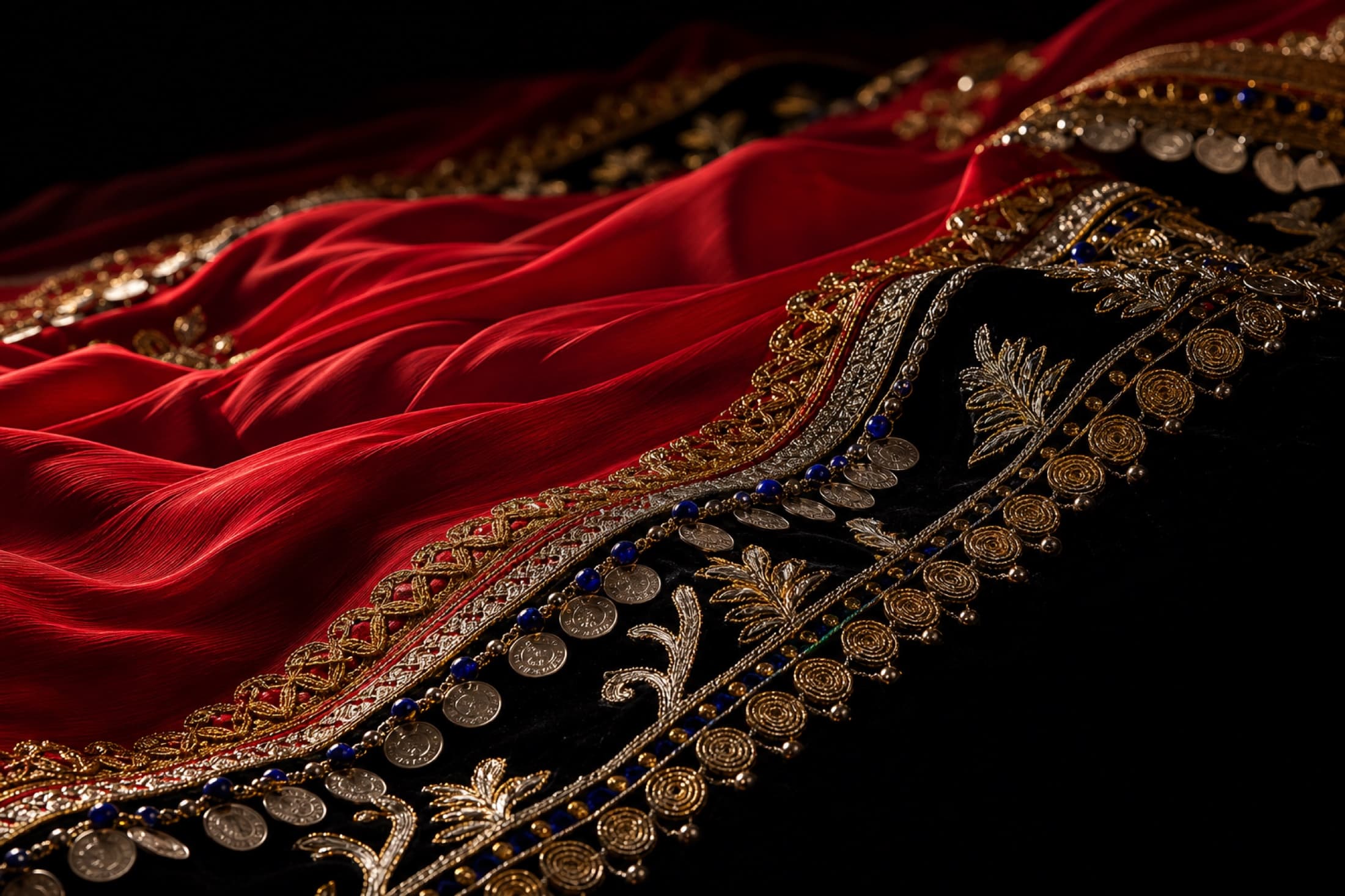
Before the event
Hang the garment to release folds. Steam gently from a distance — never iron directly over coins, beads, or mirrorwork.
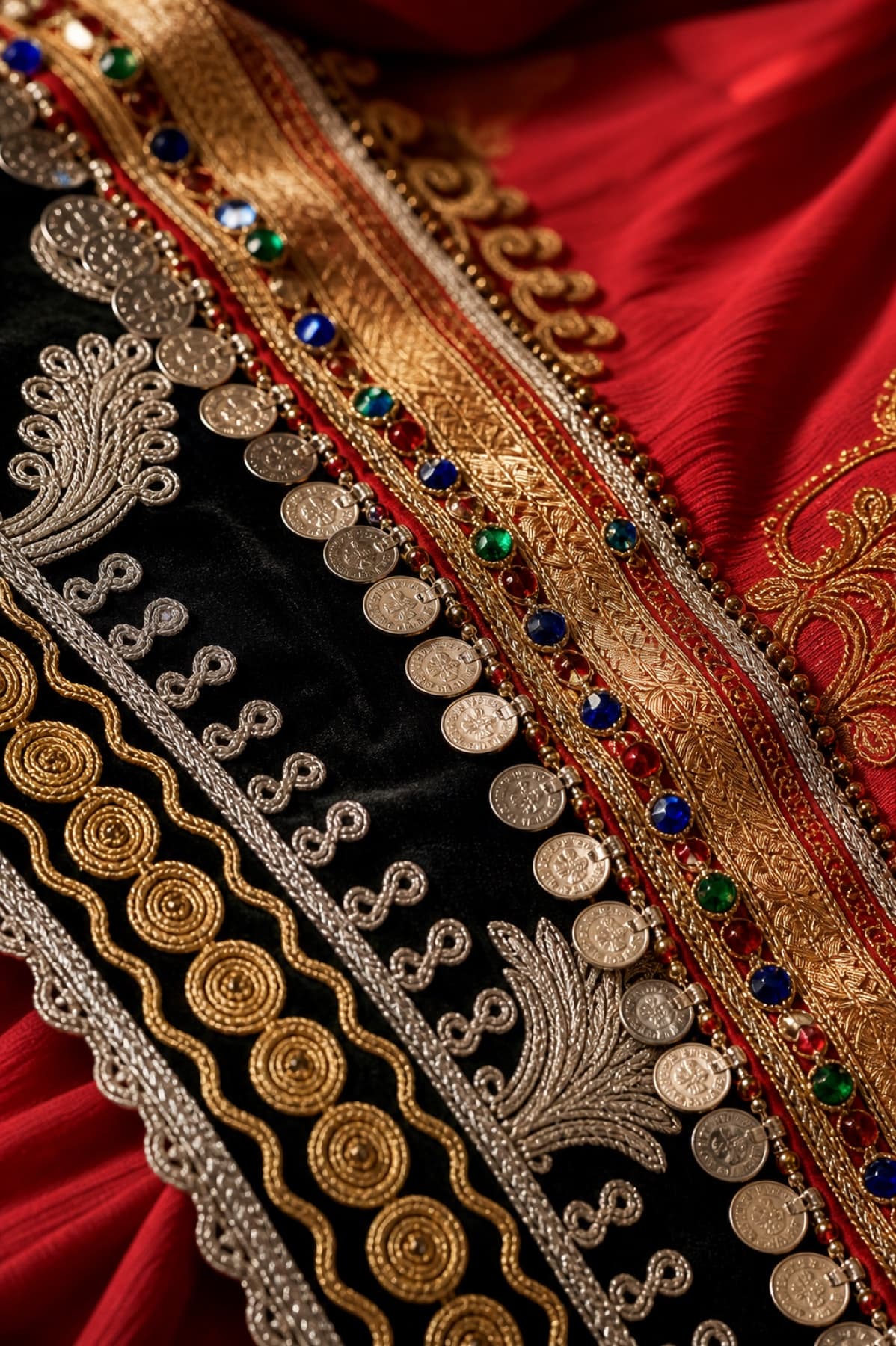
Garment care
Afghan ceremonial dress is heavy with coinwork, beadwork, and mirrorwork — and it rewards a little ritual. Here is how to steam, wear, store, and return a piece so it photographs like the first day for years of celebrations.
A cultural object first
Every piece we hand over carries the hours that went into it — rows of coins, lapis beads worked by hand, mirrors set into thread. Care is not a chore at the end of the night. It is part of wearing something made with this much intention.
The essentials
The short version, for the days around your event. The detail follows below.
“Look after the work, and the dress keeps the night it was made for.”The Atelier
Hang the garment to release folds. Steam gently from a distance — never iron directly over coins, beads, or mirrorwork.
Apply perfume and makeup before dressing. Keep heavy bags off embellished panels and store jewellery contact points carefully.
Air the piece, spot-check embellishment, and store flat or on a padded hanger away from direct light and damp.
Return in the supplied garment bag by the agreed date. We handle specialist cleaning and any restoration.
Before · during · after
Three short windows of care — getting ready, the night itself, and the morning after. None of it takes long, and all of it protects the work.
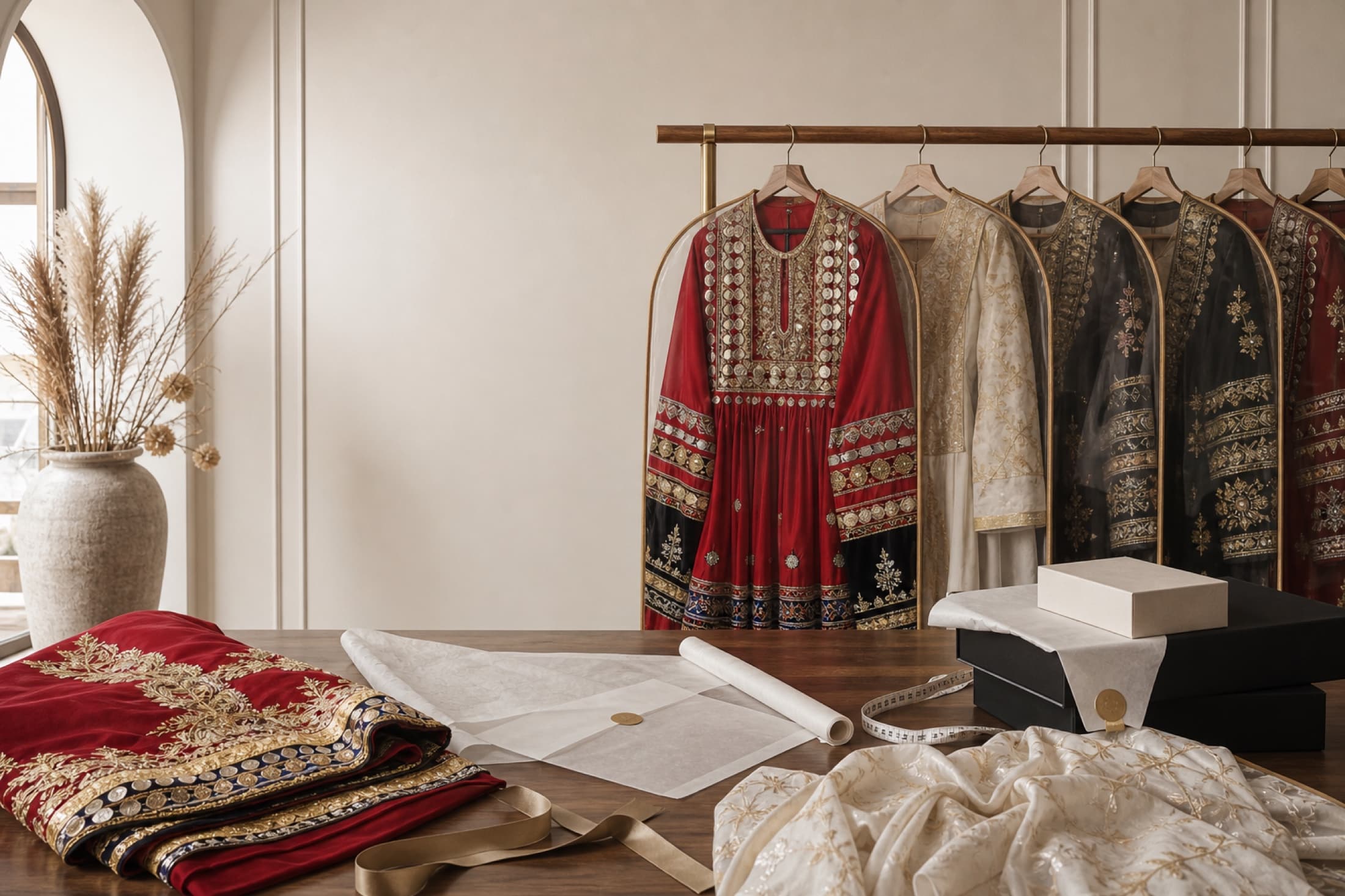 Before — steaming
Before the event
Heat and pressure are the two things embellishment cannot take. A flat iron will scorch metallic thread, crack mirrors, and dull the shine of coinwork in a single pass. Steam relaxes the fabric without ever touching the surface.
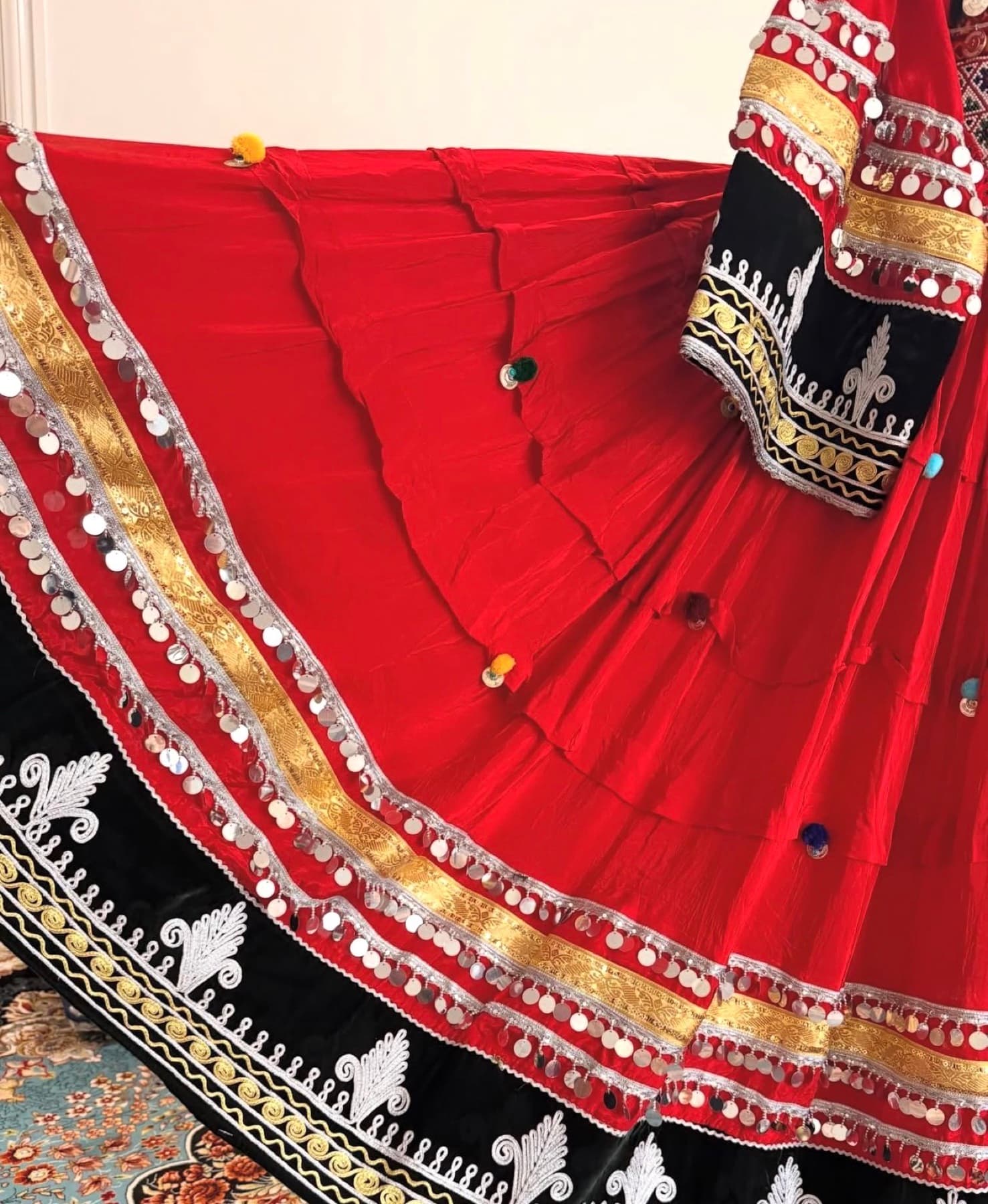 During — wearing
Wearing it well
Most marks on a ceremonial dress arrive before anyone leaves the house. Fragrance, hairspray, and foundation all stain pale thread and cloud mirrorwork. Finish getting ready, then step into the piece.
 After — storing
Storing it right
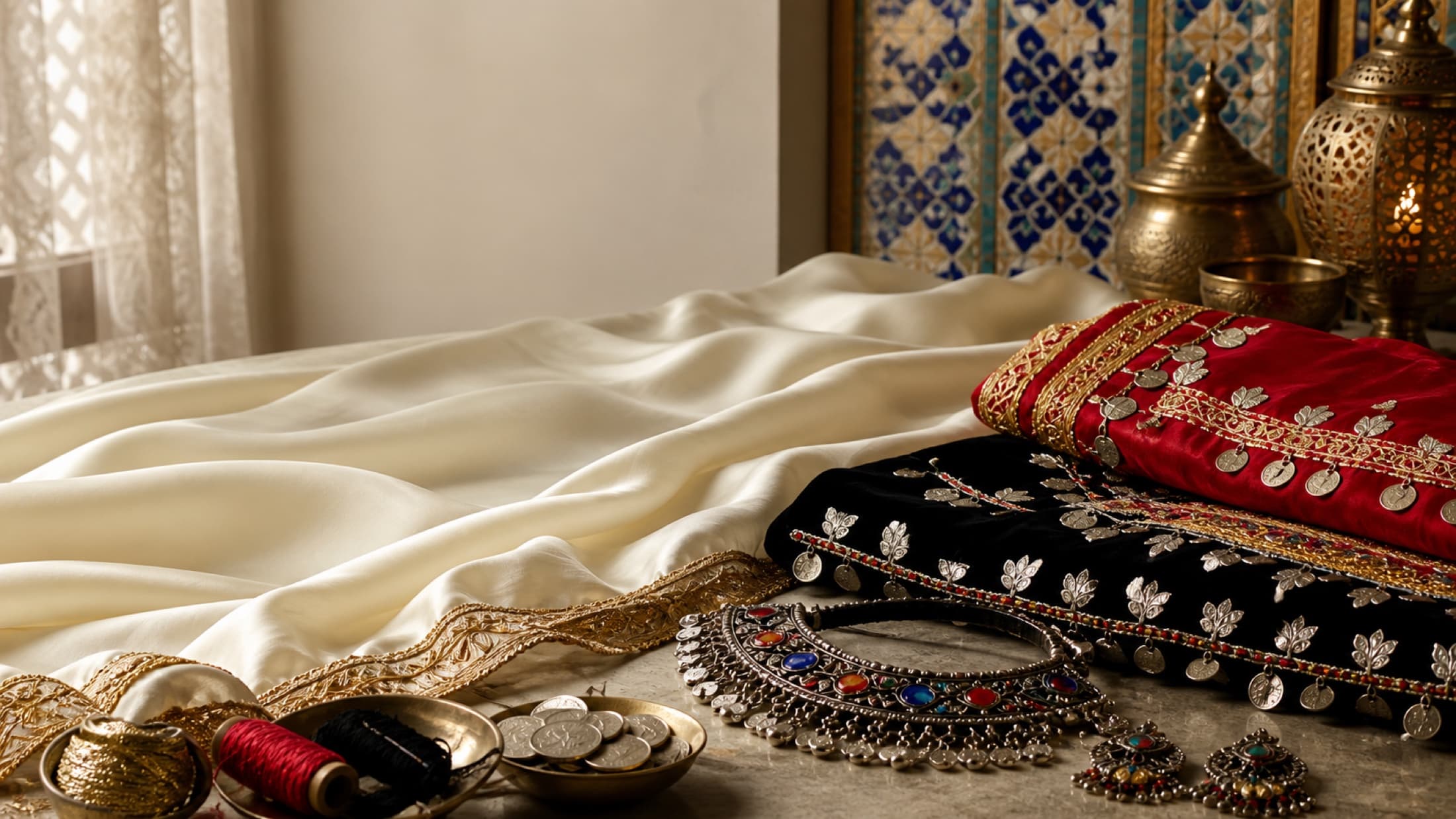
Weighty pieces stretch and warp if they hang too long on a narrow hanger. Light fades reds and golds over the months between celebrations. Stored flat, in the dark, in something that breathes, a dress is ready for the next Eid or wedding.
Folded flat, in the dark, a piece is ready for the next Eid or wedding.
What to avoid
The quickest way to damage an embellished dress is also the most common. Keep these four off the list.
“The damage we see most often is heat, a wash drum, and a spray of perfume on cloth.”The Atelier
Never press an iron over coins, beads, mirrors, or metallic thread. Steam from a distance instead.
A wash drum tears embellishment and pulls thread. Spot-clean, then leave deeper cleaning to a specialist.
Spray fragrance on skin, not the dress. Alcohol marks pale silk and dulls the surface of mirrorwork.
Sealed plastic traps moisture and tarnishes coins. Use a breathable bag in a dry, dark place.
 Rental returns
After a rental
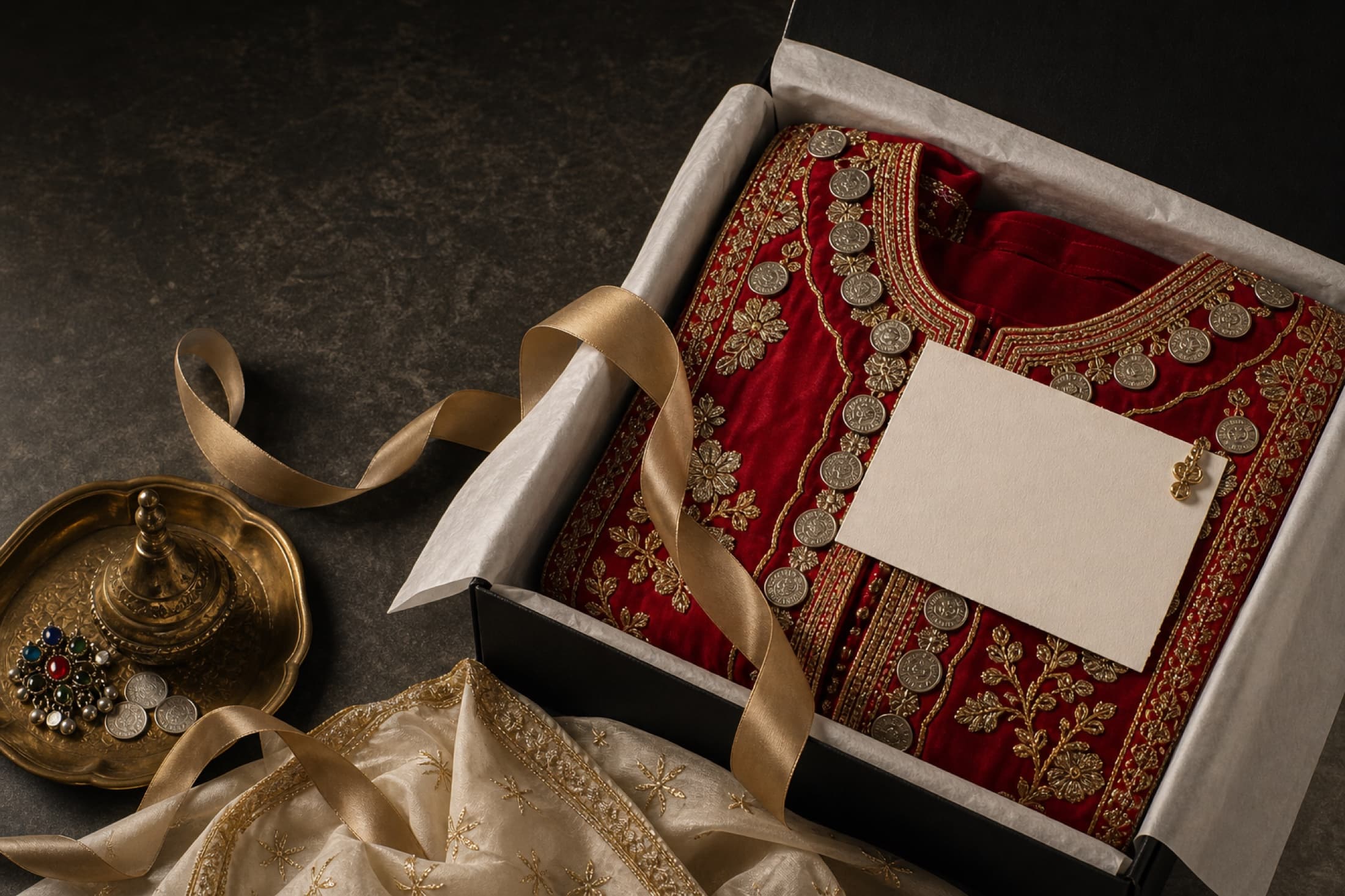
Renting a ceremonial piece should be the easy part, including the end of it. There is no cleaning to arrange and nothing to risk. Fold the dress back into the garment bag it arrived in, send it by the agreed date, and the boutique takes care of steaming, specialist cleaning, and any restoration.
Travel & handover
Whether a piece is collected in Melbourne or shipped worldwide, it leaves us packed to arrive ready to wear.
Every piece is inspected, steamed, and presented before it leaves the boutique.
Folded along its seams with acid-free tissue between the embellished layers.
Collected locally or sent worldwide with a care kit and clear unpacking notes.
A short hang to relax the folds and the piece is set for the celebration.
Care questions
Washing, loose coins, creases without an iron, packing for travel, and what a rental return really involves — the short answers that keep the work intact.
No. Coinwork, beadwork, and mirrorwork should never go through a washing machine or a home wash. Spot-clean small marks with a barely damp cloth, and leave anything more to a specialist who works with ceremonial textiles. If you own the piece, ask us for a trusted recommendation.
It happens with heavily worked pieces, and it is easily mended. Keep the loose coin or bead in a small envelope and bring it to us — we re-secure it by hand so the repair disappears into the original work. Do not glue it yourself.
Hang the dress in a steamy bathroom for twenty minutes, or steam it gently from a distance. Heavy folds usually fall out on their own after a night on a wide hanger. Keep any iron well away from coins, mirrors, and metallic thread.
Fold along the existing seams with acid-free tissue between the layers, embellished side inward, and lay it flat at the top of the case. For bridal and multi-look sets we provide a structured garment bag and packing notes so the piece arrives ready to wear.
No. Return the piece in the supplied garment bag by the agreed date and leave the rest to us. Specialist cleaning, steaming, and any restoration are part of the rental service, so you never have to risk the embellishment yourself.
Questions about a piece
Send a photo of the embellishment and tell us how you plan to wear and store it. We will write back with care notes made for that exact dress.